
Table of Contents
- The ‘Gilet Jaune’ and Warning Triangle: French Legal Non-Negotiables
- A Valid Crit’Air Vignette: Essential for Crossing the Périphérique
- Reliable Power Bank and Hands-Free Mount for Solo Navigation
- Heatwave Defense: Insulated Water Bottle and Reflective Sunshade
- Physical Île-de-France Road Map for GPS Dead Zones
- Ready for Your French Road Trip?
- Questions from the Road
Imagine the sun warming your face as you navigate sun-drenched French roads, windows down, with the scent of lavender and fresh baguettes on the breeze.
France beckons, a tapestry of ancient villages and breathtaking coastlines, all waiting for your solo exploration.
This guide is about embracing the sheer joy and independence of discovering France on your own terms.
There is magic in charting your own course, pulling over to admire a vineyard or stumbling upon a hidden bistro.
Feel the smooth cobblestones beneath your feet, taste the regional wine, and let the vibrant hues of the Provençal landscape wash over you.
As your trusted companion, I am here to ensure every mile of your journey is as enchanting as it is safe.
Because true adventure flourishes with preparation, we have curated an essential Summer Car Safety Kit for solo female drivers on French day trips.
Consider it your secret weapon for peace of mind, allowing you to immerse yourself in the beauty of France.
Stay confident and ready for anything the open road brings.
The Adventure-Saver Checklist
- Keep the *Gilet Jaune* (high-vis vest) within arm’s reach in the cabin, as French law strictly requires you to wear it before stepping out of the vehicle.
- Ensure a warning triangle is on board to place 30 meters behind your car during breakdowns, protecting your solo journey from unexpected stops.
- Avoid an on-the-spot €135 fine that could eat into your travel budget by verifying these legal non-negotiables before leaving the rental lot.
- Double-check that your vehicle has a Crit’Air vignette if you plan to cross the *Périphérique* or enter restricted zones.
The ‘Gilet Jaune’ and Warning Triangle: French Legal Non-Negotiables
Driving through the French countryside is a sensory delight. You might smell lavender fields or catch glimpses of ancient stone farmhouses.
However, French traffic laws are strict. The Gendarmerie (police) frequently checks for specific safety equipment in every vehicle.
Missing these items can result in an on-the-spot fine of up to €135. It is a quick way to ruin a budget-friendly solo adventure.
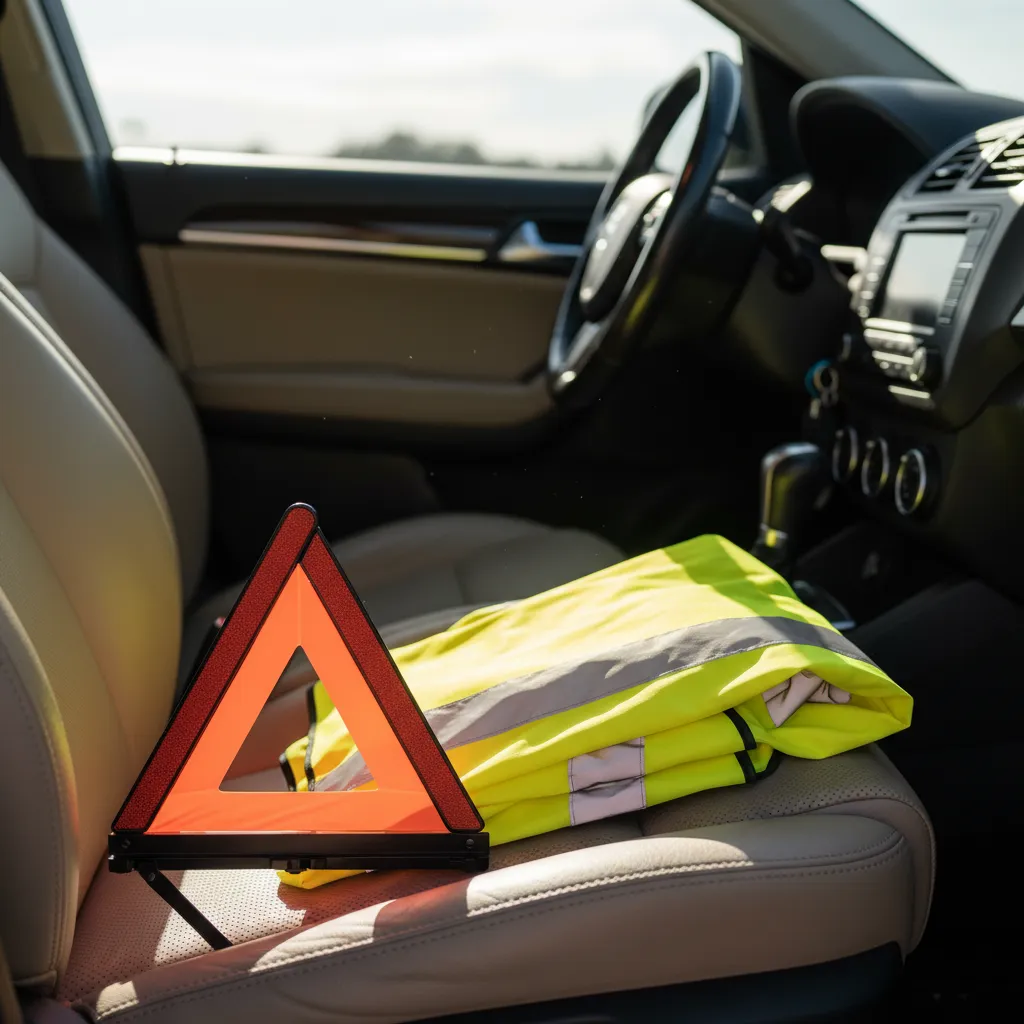
While you might have packed standard summer car essentials, France requires two specific items by law.
The “Gilet Jaune” (High-Visibility Vest)
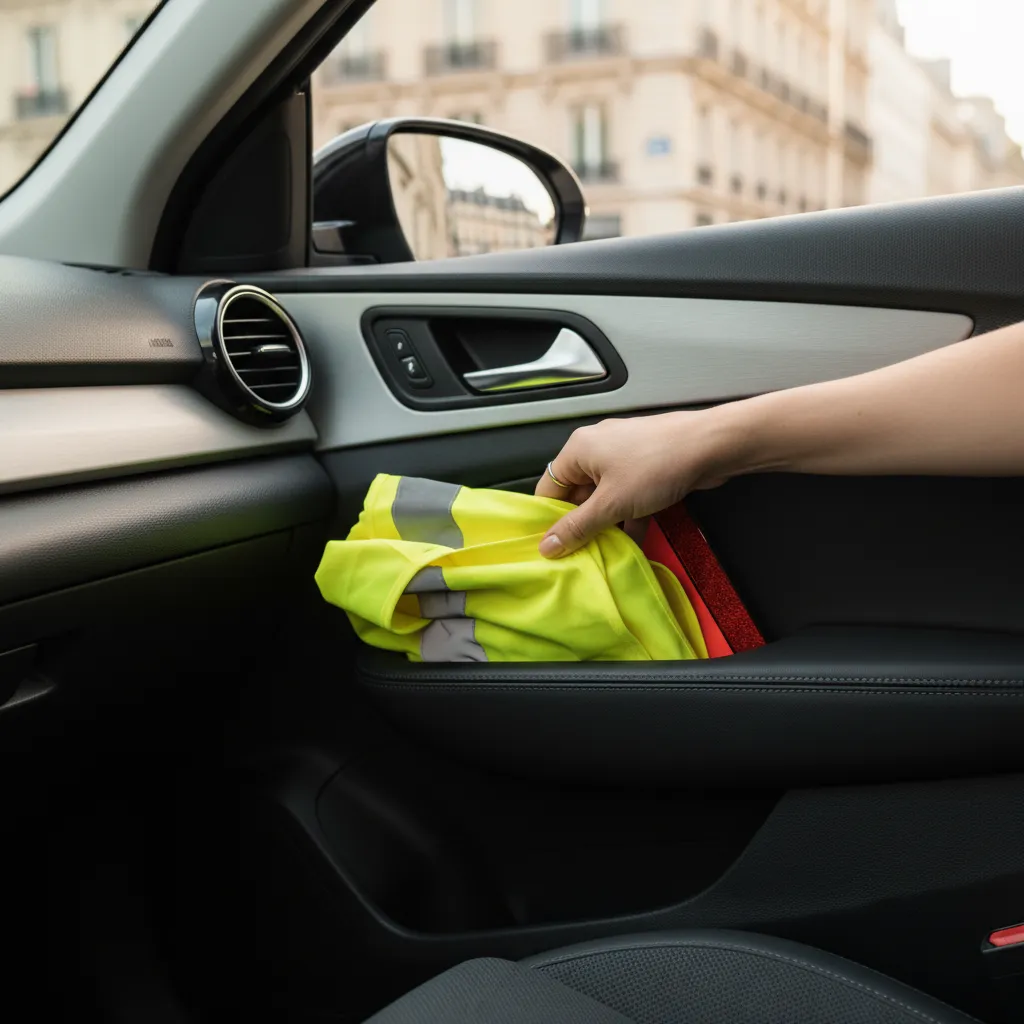
The fluorescent yellow vest is iconic in France. It may not match your chic Parisian outfit, but it is non-negotiable for safety.
Crucial Rule: You must keep this vest inside the car cabin. Do not store it in the trunk under your luggage.
If you break down, the law requires you to put the vest on before you open your door to exit the vehicle.
True style is arriving safely. The neon yellow vest is the one accessory you hope to never wear, but must always carry.
The Warning Triangle
You also need a certified warning triangle. This red reflective marker warns other drivers if your car is stopped on the road.
In the event of a breakdown, place it roughly 30 meters (about 100 feet) behind your vehicle to alert approaching traffic.
However, safety comes first. Do not place the triangle if doing so puts you in danger, especially on a busy autoroute.
If you are planning a longer road trip across Provence or just a day trip, check that your rental includes this kit.
The safety vest must be kept in the passenger compartment… and must be worn before getting out of the vehicle.
Sécurité Routière, French Road Safety Agency
🌲 Provence
Free
Scenic French Region: A beautiful region in Southern France known for its expansive lavender fields and historic charm.
- Famous lavender fields
- Ancient stone farmhouses
- Ideal for scenic multi-day road trips
Quick Reference: The Legal Checklist
Ensure your vehicle setup meets these specific French requirements before you leave the rental lot.
| Item | Required Storage Location | When to Use |
|---|---|---|
| High-Vis Vest | Glovebox or Door Pocket (Cabin) | Put on BEFORE exiting the car. |
| Warning Triangle | Trunk (accessible) | Place 30m behind stalled car. |
| Breathalyzer | Glovebox (Technically required) | Only if asked (Fine usually waived). |
Essential French Roadside Laws
- Store your high-visibility vest inside the car cabin, not the trunk, as it must be worn before you exit the vehicle in an emergency.
- Ensure your vehicle contains a certified warning triangle to be placed 30 meters behind the car if you break down.
- Verify that your rental car includes this safety kit to avoid on-the-spot fines reaching up to €135 from the Gendarmerie.
- Prioritize personal safety by only placing the warning triangle if it does not put you at risk, especially on busy motorways.
A Valid Crit’Air Vignette: Essential for Crossing the Périphérique
Driving through the bustling streets of Paris requires more than just confidence. You need the right paperwork to avoid hefty fines.
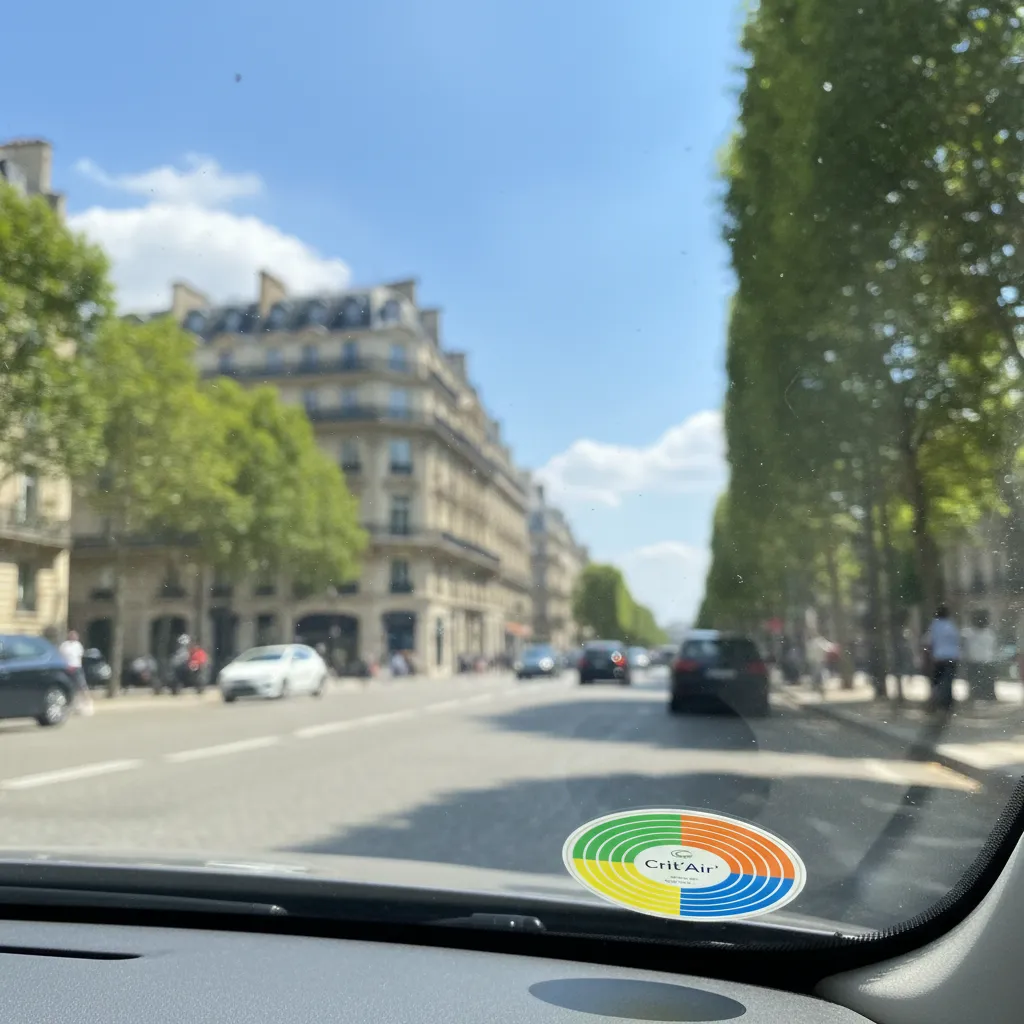
The Crit’Air vignette is an air quality certificate. It is a mandatory requirement for all vehicles entering the Low Emission Zones.
This includes the entire city of Paris and the suburbs inside the A86 motorway. Without it, your day trip could start with a police stop.
For solo female travelers, avoiding interactions with law enforcement is a key safety strategy. It keeps your journey low-profile and stress-free.
The ultimate luxury in solo travel is peace of mind. A €4 sticker buys you exactly that on Parisian roads.
Mastering the Paris Crit’Air Requirements
- The Crit’Air vignette is a mandatory air quality certificate for all vehicles entering Paris and the suburban areas inside the A86 motorway.
- Displaying a valid sticker helps solo travelers avoid unnecessary police stops and fines, ensuring a low-profile and stress-free journey.
- For a small cost of approximately €4, the vignette serves as an essential safety strategy for maintaining peace of mind on Parisian roads.
- Failure to have a valid vignette when crossing the Périphérique can lead to significant penalties and unwanted legal interactions.
🎨 Paris
Free
French Capital City: The primary starting point for day trips and a strictly regulated Low Emission Zone.
- Stringent air quality regulations
- Mandatory Crit’Air vignette zone
- Hub for solo female travelers
🗽 Périphérique
Free
Parisian Ring Road: The iconic orbital motorway that defines the boundary of the central Paris emission zone.
- Marks the start of the Crit’Air zone
- Essential transit route for day trips
- Busy urban expressway surrounding the city
🗽 A86 Motorway
Free
Outer Paris Ring Road: The secondary orbital motorway surrounding Paris that delimits the mandatory vignette area.
- Defines the Low Emission Zone suburbs
- Key navigation point for regional travel
- Required documentation zone for vehicles
Understanding the Color-Coded System
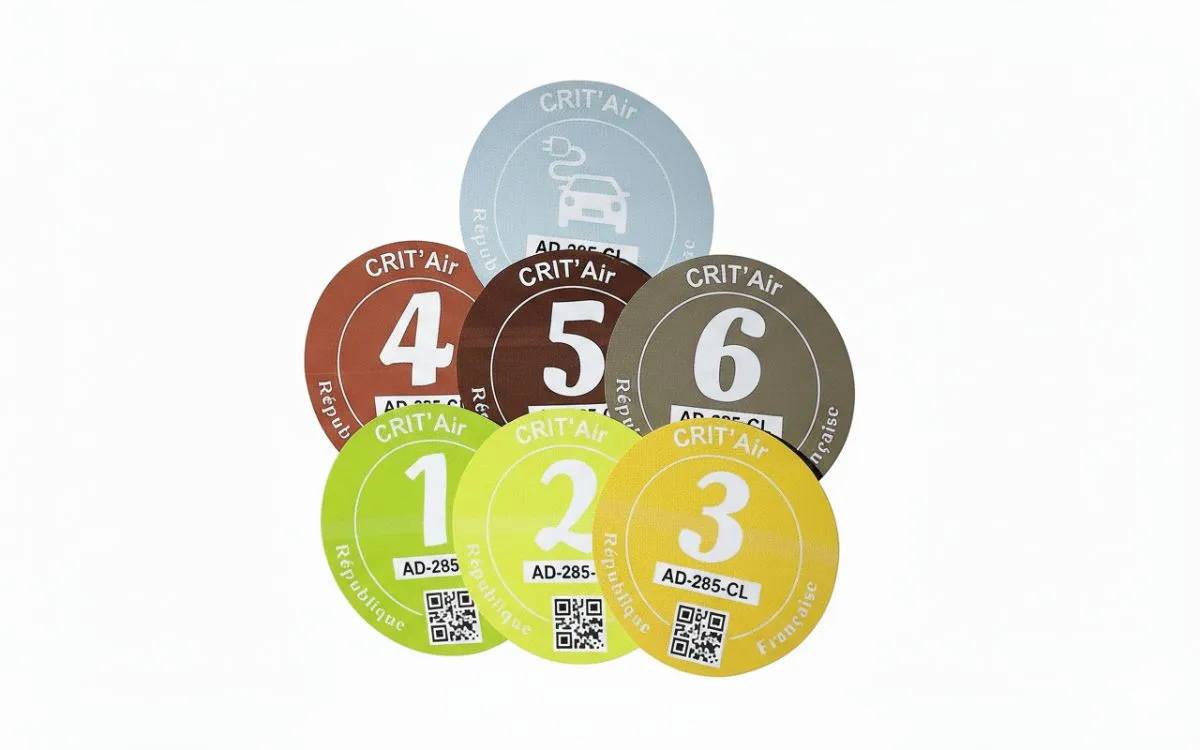
The vignette classifies cars based on their emissions. The colors range from green (electric) to gray (older diesel models).
During summer heatwaves, pollution spikes are common. Authorities may ban certain colors from driving on specific days.
Before you pack your summer car essentials, check which category your vehicle falls into.
Here is a quick breakdown of the most common categories for petrol cars to help you plan your rental or drive.
| Sticker Color | Category | Vehicle Registration Date |
|---|---|---|
| Green | Crit’Air 0 | 100% Electric or Hydrogen vehicles |
| Purple | Crit’Air 1 | Petrol cars registered from 2011 onwards |
| Yellow | Crit’Air 2 | Petrol cars registered between 2006 and 2010 |
| Orange | Crit’Air 3 | Petrol cars registered between 1997 and 2005 |
Decoding the Crit’Air Color System
- Vehicles are classified by emission levels, ranging from green for electric cars to gray for older diesel models.
- During high-pollution periods like summer heatwaves, authorities may restrict certain sticker colors from entering city zones.
- Petrol car categories are determined by registration date, with vehicles from 2011 onwards qualifying for the purple Crit’Air 1 sticker.
- The Crit’Air 0 green sticker is reserved exclusively for 100% electric or hydrogen-powered vehicles.
Avoiding Scams and Ordering Safely
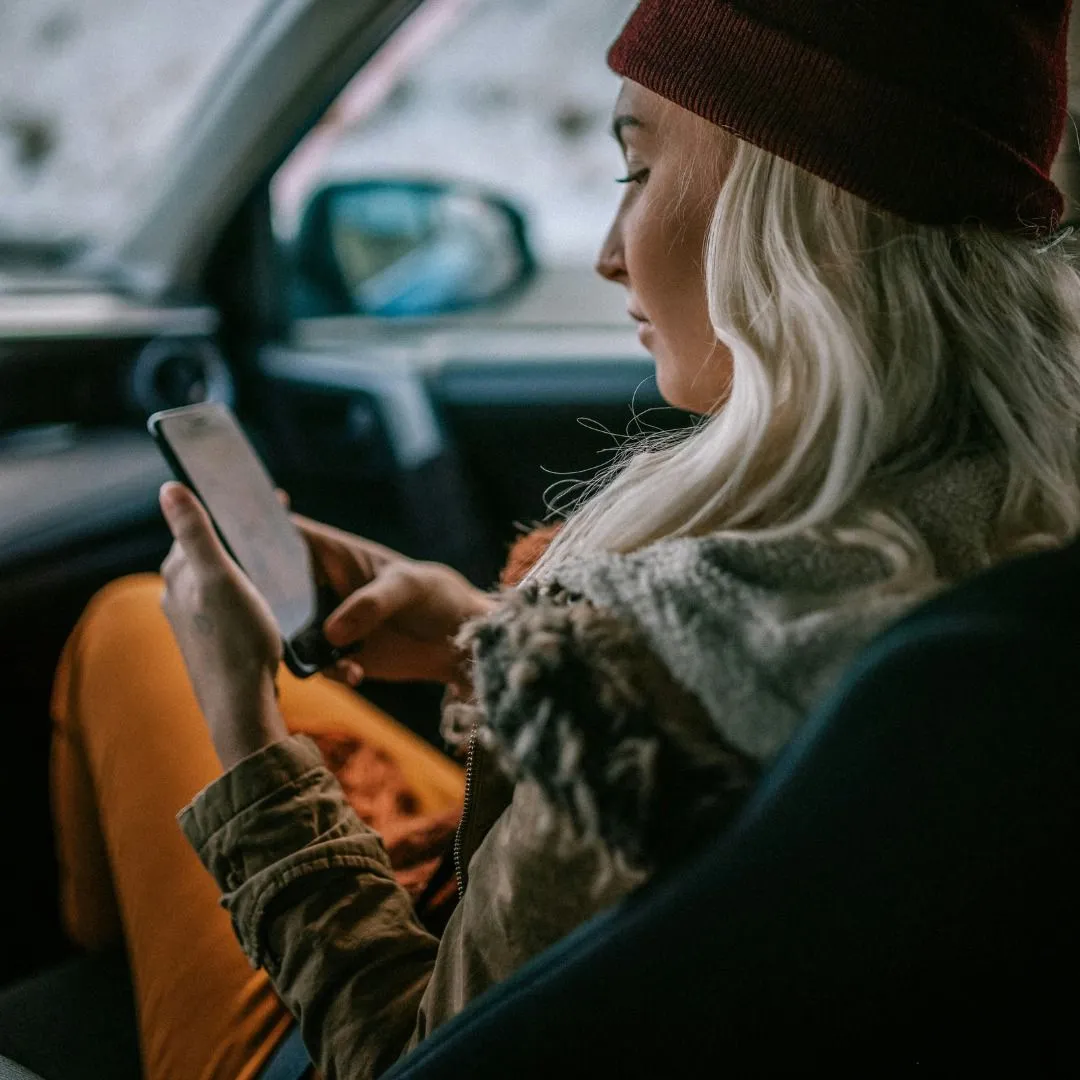
The internet is full of third-party sites that look official. They charge ten times the actual price for this simple sticker.
The official certificate costs less than €5, including postage. If you see a price like €59, you are on a scam site.
Always order from the official French government website. It is the only way to guarantee you receive a valid certificate.
Motorists are advised to be vigilant… verify that they are on the official site… Other websites are private intermediaries that charge high prices.
Centre Européen des Consommateurs France, Travelling in France: The Crit’Air Vignette
If you are renting a car, ask the agency beforehand. Most French rentals already have the sticker, but check to be sure.
For those driving their own car, order it at least six weeks in advance. Shipping times can vary during the peak travel season.
Once your paperwork is sorted, you can focus on fun things. Like deciding what to wear in Paris for your arrival.
Don’t Get Stuck with a Scam: Safe Sticker Ordering
- Only use the official French government website to pay the standard rate of under €5.
- Beware of private third-party sites that inflate prices by up to ten times the official cost.
- Order your sticker at least six weeks before your trip to account for international shipping.
- Verify with rental agencies if a sticker is already provided before attempting to purchase one.
Reliable Power Bank and Hands-Free Mount for Solo Navigation
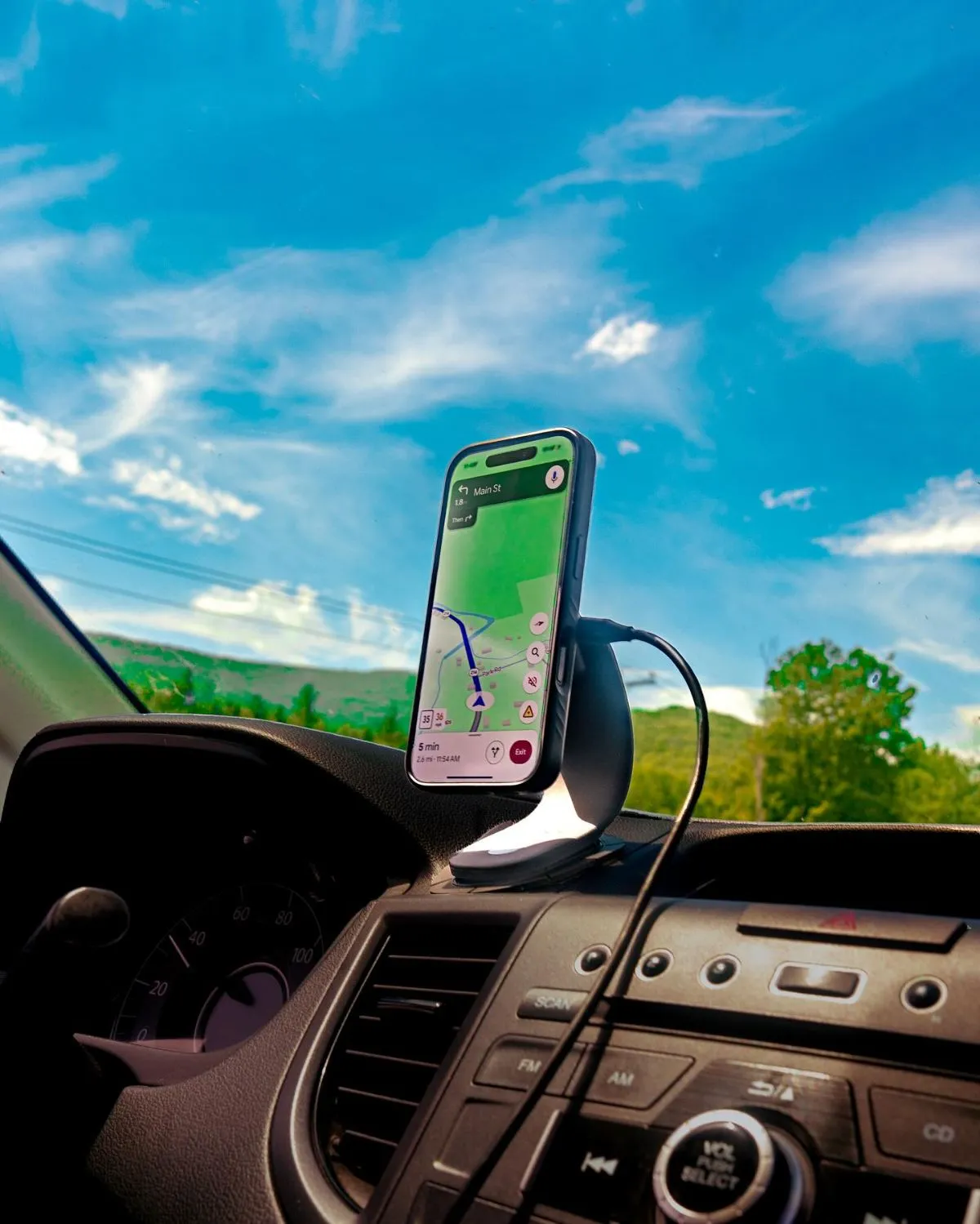
Getting lost in the French countryside sounds romantic in theory. You imagine rolling vineyards, the scent of lavender, and hidden bakeries.
In reality, a dead phone battery on a rural D-road is stressful. Solo navigation requires reliable tech to keep you safe and on track.
GPS apps drain batteries aggressively. A standard day trip to Giverny or Fontainebleau can consume your entire charge before lunch.
True travel freedom is knowing you have the power to explore further and the tools to get home safely.
🏛️ Giverny
Free
Claude Monet’s Village: A popular day-trip destination from Paris famous for its Impressionist history and gardens.
- Home of painter Claude Monet
- Iconic destination for art lovers
- Standard day excursion from the city
🏛️ Fontainebleau
Free
Royal Forest and Palace Town: A historic town south of Paris renowned for its massive forest and former royal residence.
- Château de Fontainebleau
- Massive forest popular for nature trips
- Significant historical landmark of France
The Legal Necessity of Hands-Free Mounts
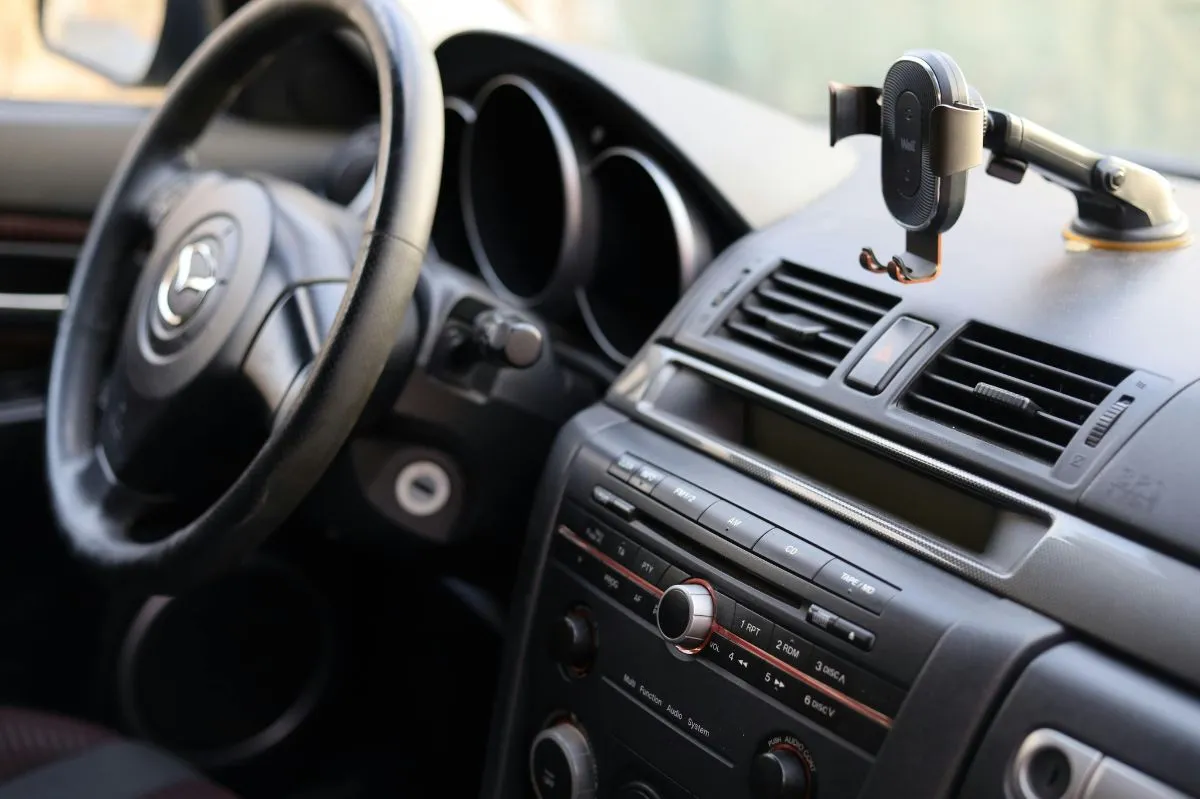
French traffic laws are incredibly strict regarding mobile device usage. Touching your phone while the engine is running is a major offense.
Police in the Île-de-France region are vigilant. You must have your device secured in a holder that does not obstruct your view of the road.
A vent-mounted holder is often best for rental cars. It is portable, lightweight, and leaves no sticky residue on the dashboard.
Prioritize a mount with a strong magnetic grip. Cobblestone streets in historic villages can easily dislodge cheaper plastic clamps.
Use of a hand-held mobile phone while driving: € 135 fine and 3 penalty points.
European Commission, Going Abroad: Traffic Safety in France
Power Bank Specs for Full-Day Excursions
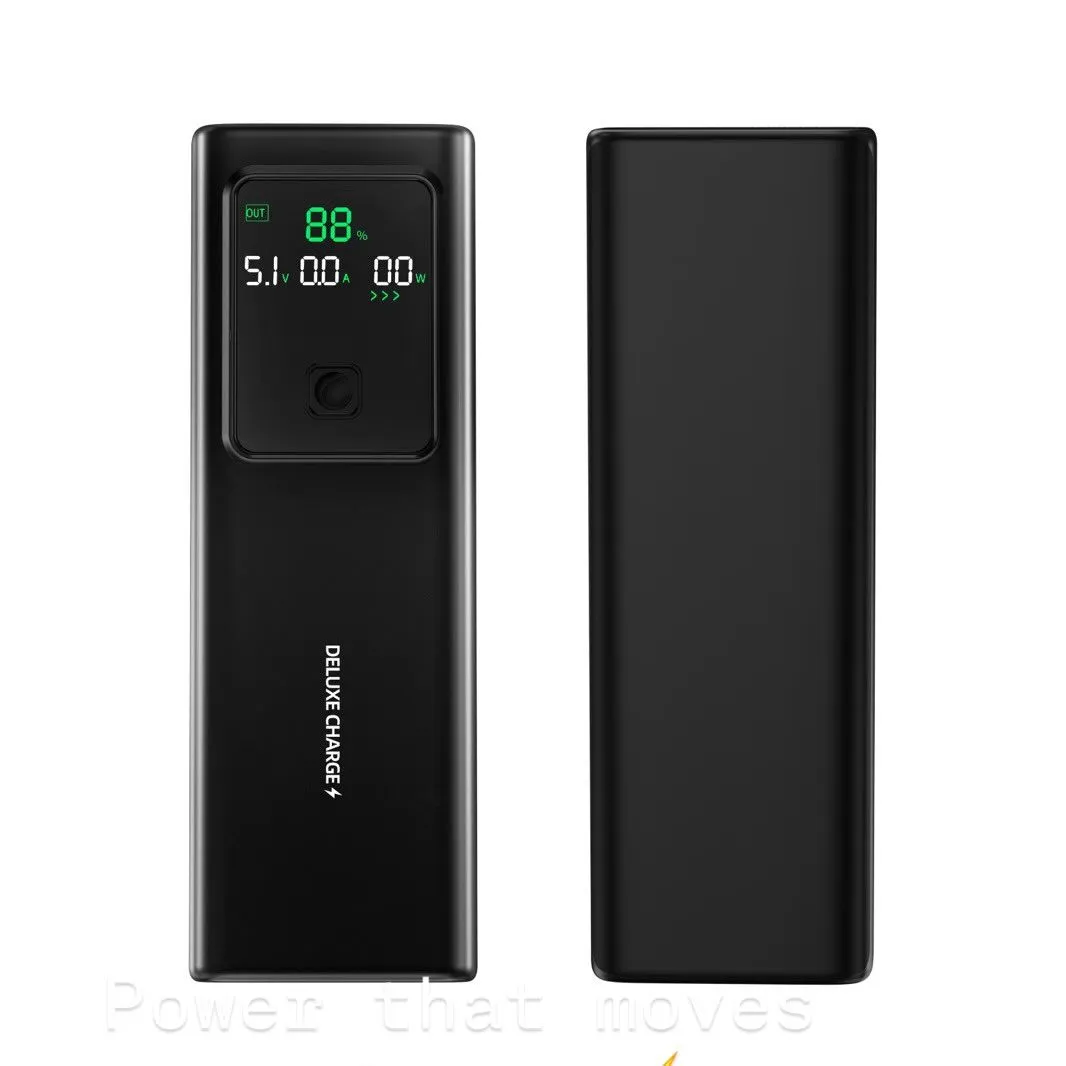
Never rely solely on a rental car’s USB port. They are often slow, broken, or incompatible with newer devices. Bring your own power source.
A reliable power bank is your safety net. If your car breaks down, you need a charged phone to call assistance or translate local signs.
For those planning a long road trip across France, a 20,000mAh battery is ideal. It can charge a phone four times.
If you are just doing short hops, a slim 10,000mAh unit fits in a small purse. This ensures you can take photos and navigate without worry.
Below is a checklist of technical essentials to keep in your glovebox for a smooth journey.
- Magnetic Vent Mount: Quick to install and remove in rental vehicles.
- Dual-Port Car Charger: A 12V adapter (cigarette lighter style) as a backup.
- Braided Cables: Durable cords that withstand heat and bending.
- Offline Maps: Download Google Maps for the Île-de-France area beforehand.
- Power Bank: Minimum 10,000mAh capacity with fast-charging (PD) capability.
Having these items ready allows you to focus on the experience. You can enjoy the drive knowing you are prepared for any detour.
This preparation helped me immensely when I took my first solo trip. Peace of mind is the ultimate luxury.
Essential Tech for Solo Navigation in France
- French traffic laws are strict; touching a phone while driving can result in a €135 fine and penalty points.
- A magnetic vent mount is ideal for rental cars to provide stability on cobblestone roads without damaging the interior.
- Do not rely on rental car USB ports; carry a 10,000mAh to 20,000mAh power bank for reliable GPS and emergency access.
- Maintaining a full battery is a critical safety measure for translating signs or calling for assistance during rural breakdowns.
Heatwave Defense: Insulated Water Bottle and Reflective Sunshade
The French sun is unforgiving on the Autoroutes in July. Without air conditioning, a traffic jam on the Périphérique becomes a sauna.
Even with AC, direct sunlight drains your energy quickly. Heat exhaustion is a real risk for solo drivers navigating unfamiliar roads.
Stay cool to stay safe; dehydration slows driver reaction times just as much as alcohol.
The Hydration Anchor
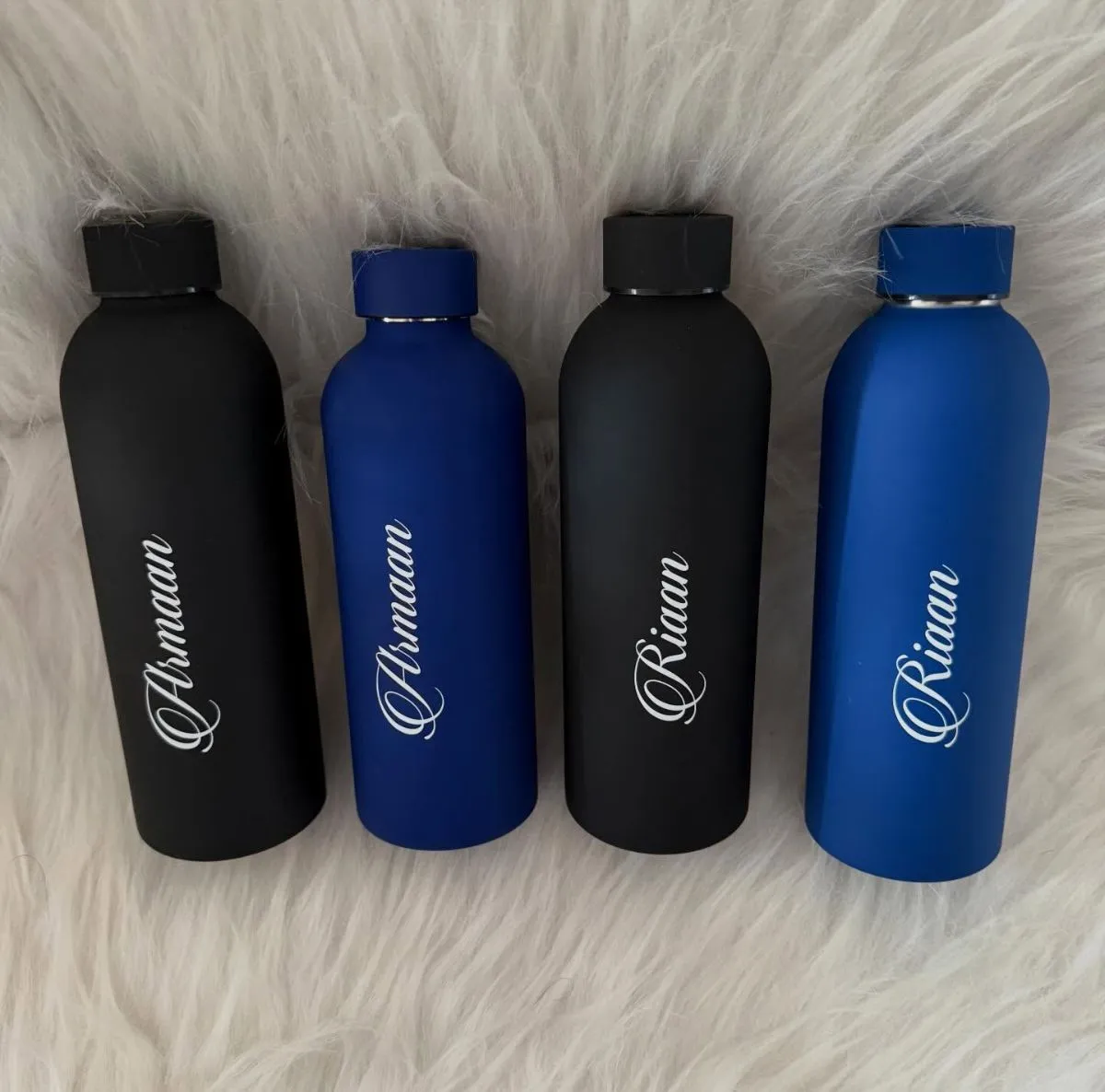
A plastic bottle left on the seat will turn into hot tea by noon. Chemical leaching from heated plastic also tastes terrible.
Invest in a double-walled vacuum-sealed bottle. It keeps liquids ice-cold for up to 24 hours, even inside a locked vehicle.
Staying cool is just as important as knowing what to wear in Paris in summer for comfort. Sip water constantly to maintain your focus.
Reflective Shielding
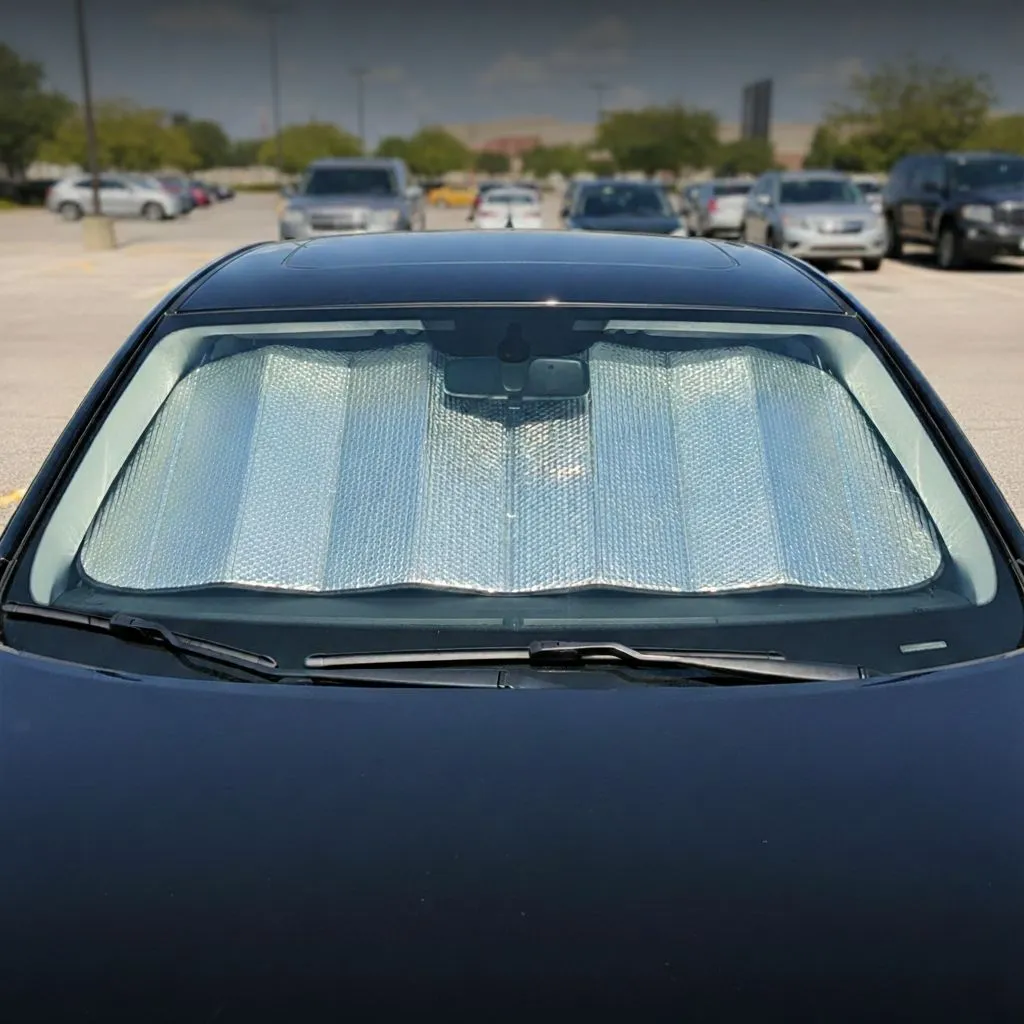
Leaving your vehicle to explore a village allows heat to build up. The steering wheel can become too hot to touch safely.
A reflective sunshade blocks UV rays and reduces cabin heat. It protects your dashboard and makes re-entry bearable.
This is crucial for any hot climate drive, similar to a 7-day Andalusia White Villages road trip.
Dehydration can cause symptoms such as headache, tiredness and confusion… Keep a supply of water with you at all times.
Road Safety Team, RoSPA Driver Safety Advice
Why a Sunshade is Essential:
- Prevents the steering wheel from burning your hands.
- Protects electronic GPS devices from overheating.
- Keeps leather seats from scalding your skin.
- Reduces the load on your air conditioning system.
The Driver’s Heat Shield
- Prioritize hydration with a vacuum-sealed bottle to maintain reaction times, which can drop significantly when dehydrated.
- Use a reflective sunshade to protect sensitive dashboard electronics and keep the steering wheel at a touch-safe temperature.
- Avoid plastic water bottles as heat causes chemical leaching and results in unappealing, warm liquids.
- Minimize the load on your vehicle’s air conditioning by using reflective shielding to block UV rays during stops.
Physical Île-de-France Road Map for GPS Dead Zones
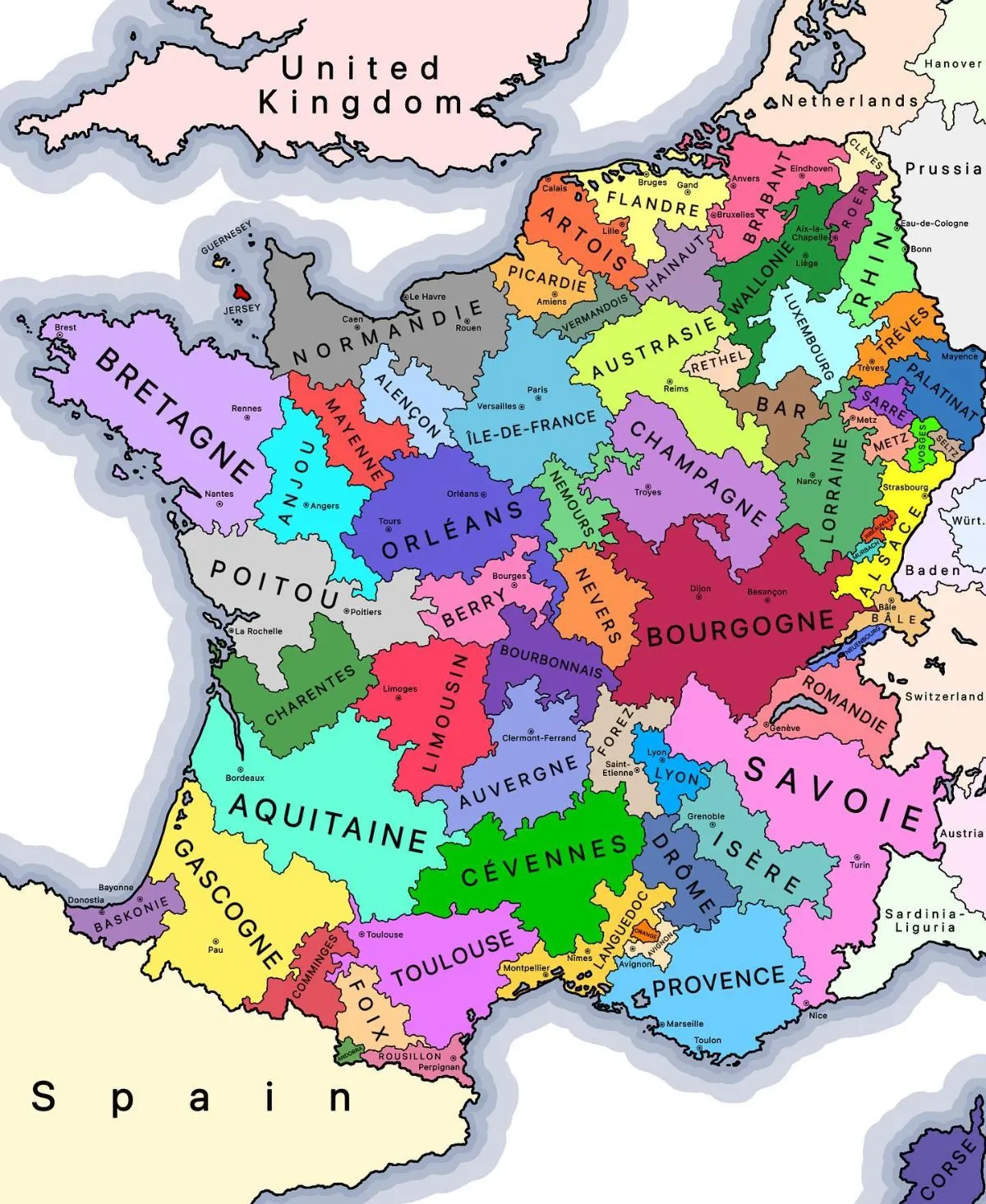
Reliance on Google Maps is second nature. But in the French countryside, signal can vanish. One minute you are cruising; the next, the screen goes blank.
French locals call these signal-free areas zones blanches. They exist even just an hour outside Paris. A physical map is not vintage decor. It is a lifeline.
True freedom on the road is knowing you can find your way, even when the signal fades.
Invest in the Michelin Regional Map 514. It covers the entire Île-de-France region. The scale is detailed enough to show small D-roads and scenic detours.
Keeping a map in your glovebox ensures you are never truly lost. It provides a broad perspective that a tiny phone screen simply cannot match.
GPS is a great tool, but a paper map gives you the big picture… and it never runs out of batteries.
Rick Steves, Driving in Europe Tips
Mastering Navigation in Zones Blanches
- Prepare for sudden signal loss in rural areas known as ‘zones blanches’ just outside Paris.
- Carry the Michelin Regional Map 514 for detailed views of small D-roads and scenic detours.
- Use paper maps to gain a wide-angle perspective of your route that small screens cannot provide.
- Maintain a reliable backup navigation system that functions without batteries or cellular connectivity.
Understanding French Road Classifications
To use your map effectively, you must understand the road hierarchy. The letter preceding the road number tells you exactly what to expect.
We often rush to the fastest route. However, learning from my car rental experiences, I now prefer the scenic route.
| Road Type | Symbol | Best For |
|---|---|---|
| Autoroute | A (Blue/Red) | Speed and efficiency. |
| Route Nationale | N (Green/Red) | Direct travel, no tolls. |
| Route Départementale | D (Yellow/White) | Scenic views and discovery. |
The D-roads are where the magic happens. They wind through poppy fields and sleepy stone villages. They are slower but offer a sensory feast.
Trace your intended path with a highlighter the night before. This mental prep helps you stay calm if the GPS fails. It turns navigation into a ritual.
For those new to solo exploration, this simple preparation builds immense confidence. Read about how I overcame my fear of solo travel for more inspiration.
Deciphering French Highway Symbols
- Identify roads by their prefixes: ‘A’ for fast motorways, ‘N’ for direct toll-free routes, and ‘D’ for scenic backroads.
- Choose D-roads (Route Départementale) to experience the authentic charm of rural landscapes and historic stone villages.
- Use a highlighter to trace your intended path on a physical map to serve as a reliable backup if GPS fails.
- Prepare your route the night before to build navigation confidence and transform driving into a relaxing ritual.
Ready for Your French Road Trip?
Escaping the bustle of Paris for a day trip is pure magic. The open road offers a sense of freedom that trains simply cannot match.
However, confidence is key to enjoying that freedom. A well-stocked safety kit transforms potential stress into a mere bump in the road.
Whether it is the mandatory reflective vest or extra water for the heat, these items are your backup plan. They ensure you stay safe and self-reliant.
Pack smart, drive safe, and let the stunning landscapes of France be your only distraction. Your next great adventure is just a drive away.
Questions from the Road
Most reputable agencies include the vest and triangle. However, always inspect the trunk and glovebox before leaving the lot to avoid fines.
Dial 112. This is the universal European emergency number. Operators often speak English and can direct you to police, ambulance, or fire services.
Yes, it is generally very safe. Stick to well-lit areas for breaks, keep doors locked while driving, and trust your intuition as you explore.
While technically required by law, the fine for not having one has been scrapped. It is recommended to carry one, but not strictly penalized.


